Ask what justifies your judgment, and whether its principle can hold for everyone.
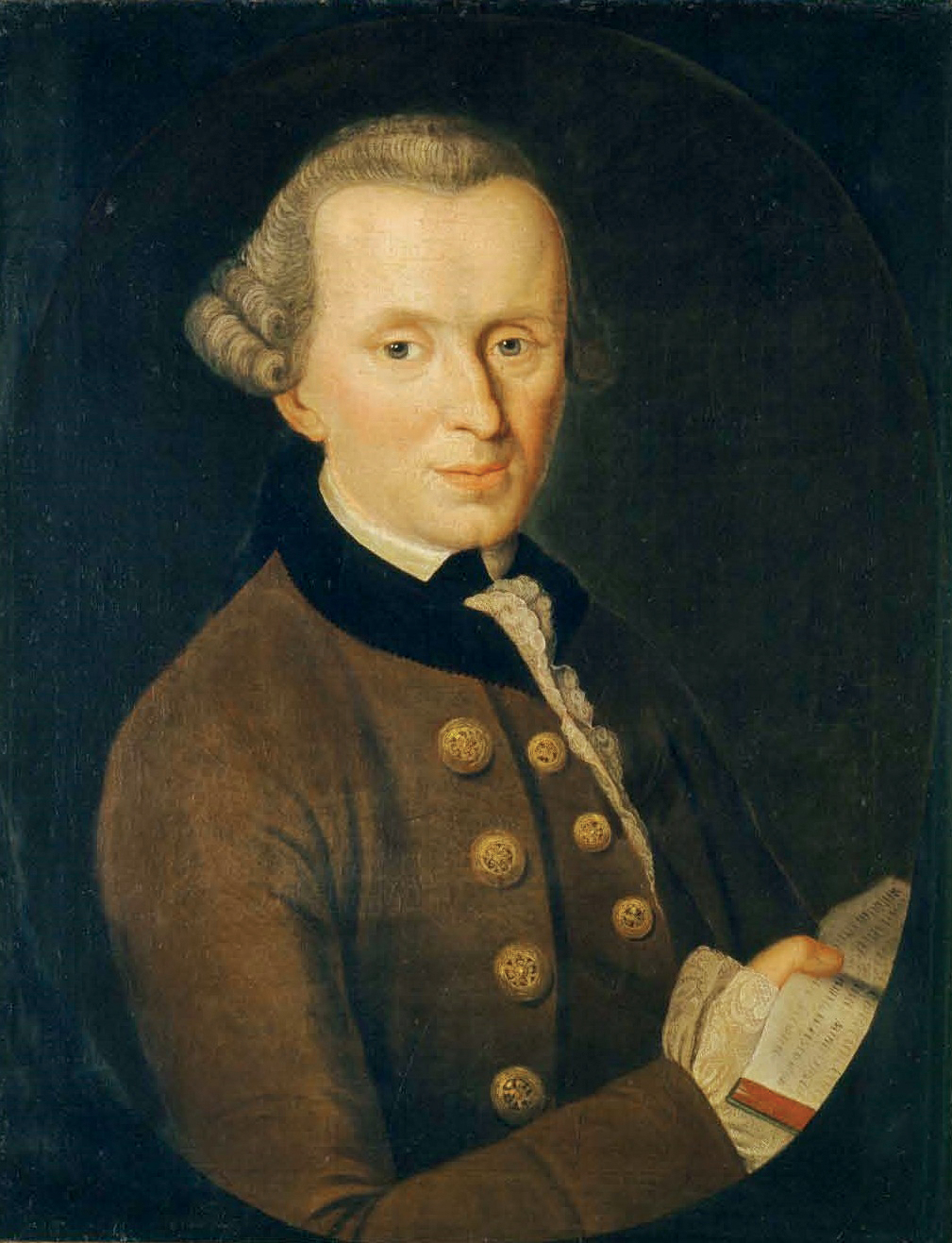
Editorial summary · Johann Gottlieb Becker, 1768. Public-domain painting, via Wikimedia Commons.
WHY READ IMMANUEL KANT
A life under pressure, not a mascot.
Kant asks what we can know and what makes an action morally justified. His critical philosophy connects the conditions of experience with questions of duty, autonomy, human dignity, and public reason. Read the arguments in their own settings before applying them to modern decisions.
The useful starting point is justification: what licenses a claim to knowledge, and what makes a principle of action binding beyond one's own advantage?
Especially useful forMoral judgmentHuman dignityKnowledge and freedom
LIFE & CONTEXT · ABOUT 2 MIN READ
The life behind the philosophy.
Follow the events and choices behind the work. Later traditions and uncertain evidence are identified as the story unfolds.Immanuel Kant: biography contents
A university life, not a collection of habits
Immanuel Kant was born in Königsberg in 1724. After university study and work as a private tutor, he returned to academic teaching in 1755. He became professor of logic and metaphysics in 1770. The familiar image of a punctual walker can obscure a much more consequential life of teaching: his lectures covered logic, metaphysics, ethics, and subjects including physical geography.
Kant's early work engaged natural science as well as metaphysics. His later critical project did not simply replace observation with speculation. It asked what makes objective experience possible and what happens when reason extends its claims beyond possible experience. This provides the starting point for a course that distinguishes knowledge from opinion without treating the mind as a passive storehouse of facts.
Knowing an object involves conditions under which it can be experienced and judged. Kant's turn toward those conditions is not a license to call every opinion true.
The critical works and their different questions
The Critique of Pure Reason appeared in 1781 and in a substantially revised edition in 1787. Its critical task concerns reason's authority, limits, and conditions of legitimate use. Critique here is an inquiry into justification, not a general instruction to distrust everything.
The Groundwork of the Metaphysics of Morals appeared in 1785, followed by the Critique of Practical Reason in 1788. The Critique of the Power of Judgment followed in 1790. These works address connected but distinct problems. Our course, available in English and Korean, focuses on the entry points to theoretical philosophy, the Groundwork's moral argument, and the public questions of enlightenment and peace; it does not present itself as an exhaustive treatment of Kant's system.
The Groundwork follows a path from good will through duty to universal legislation. Keep the reason for an action distinct from the success of its outcome.
Public reason and an unfinished inheritance
In his 1784 essay on enlightenment, Kant connected thinking for oneself with the freedom to address a reading public. In Perpetual Peace, published in 1795, he asked about the legal and political conditions of peace between states. Private goodwill alone was not his proposed solution to public conflict.
Kant died in 1804. His arguments about universal respect remain influential, but his writings also include discriminatory views about race and gender. Studying the arguments does not require endorsing those judgments or turning his biography into an exemplary life. The task is to understand the claims, identify their premises, and judge both their reach and their failures.
Autonomy becomes a relation between equal lawgivers, while public reason and peace raise questions about the institutions in which persons can live together.
HOW TO READ CAREFULLY
Context changes the lesson.
English and Korean explanations are original editorial prose. Historical texts, later interpretations, and fictional applications are identified separately.
Primary works and historical sources
Critique of Pure Reason (1781/1787), B Preface and Transcendental Doctrine of Elements
Groundwork of the Metaphysics of Morals (1785), Sections I–III
An Answer to the Question: What Is Enlightenment? (1784)
Perpetual Peace (1795), Preliminary and Definitive Articles
Reading Kant: knowledge, dignity, and public reason
What grounds should support what I claim to know and what I judge to be right?
A complete four-part, twelve-lesson course moving from critical philosophy to good will, universal law, humanity, autonomy, freedom, enlightenment, and peace. Source locations, original explanations, fictional cases, and diagrams connect the arguments with choices in ordinary life.
About 88 min · 12 complete lessons · Sources, arguments, and applications
Part 1
Part 1 · What can we know?
Begin with critical philosophy, the conditions of experience, and the boundaries of knowledge.
01
The critical turn: what can reason know?
Does Kant's Copernican turn mean the mind creates the world?
Read Kant's Copernican turn through the conditions of knowledge, scientific inquiry, and a fictional museum case distinguishing objectivity from preference.
Does collecting more data mean that we understand an object?
Explore space, time, intuition, concepts, and causality in Kant. A fictional sound exhibition shows why receiving evidence and judging it require distinct roles.
If we know only appearances, is all our knowledge false?
Distinguish appearance, error, and things in themselves. Kant's antinomies and a fictional diary case separate missing evidence from limits of possible knowledge.
Move from good will to maxims and universal law, asking what gives an action its moral grounds.
04
Good will and duty
How does a good will differ from kind feelings or good intentions?
Study Kant's jewel, honest dealer, and helping examples. Separate success, conformity with duty, and action from duty without dismissing effort or evidence.
Does the difference between imperatives depend on how forcefully we speak?
Explore hypothetical and categorical imperatives in Kant. Circumstances, actions, and purposes reveal the principle behind a choice and its possible personal exceptions.
How does universalization differ from majority voting or predicting bad outcomes?
Compare deceptive promising with refusing help. Explore Kant's contradictions in conception and willing, perfect and imperfect duties, and a studio-booking case.
Connect treating persons as ends with common legislation and the standpoint of freedom.
07
Humanity as an end
Does using another person's skills always mean treating them merely as a means?
Read Kant's humanity formula through deception, consent, and assistance. An interview case examines whether cooperation respects another person's own purposes.
Why consider ourselves free agents if our actions also have natural causes?
Read negative and positive freedom in Kant's Groundwork. Distinguish natural explanation, practical justification, two standpoints, and the argument's limits.
Read enlightenment and peace, then follow a museum under pressure as questions from the different works meet.
10
Enlightenment and public reason
Does thinking for ourselves require rejecting experts?
Explore Kant's 1784 enlightenment essay: guardianship, public and private uses of reason, future inquiry, and a fictional guide's criticism of a museum label.
How does stopping a war differ from establishing a lasting peace?
Read Kant's republican constitution, pacific federation, and cosmopolitan hospitality. Distinguish visiting from settling and public right from personal kindness.
How can we judge responsibly with uncertain knowledge and competing purposes?
Follow a fictional museum facing uncertain evidence and refused advertising use. Kant on knowledge, maxims, humanity, and public reason illuminates its choices and remaining costs.