Freedom is easy to praise when no choice has a cost. It becomes difficult at the point where family expectations, money, illness, institutions, and other people’s needs press against what we want. A serious philosophy of freedom must describe agency without pretending that everyone begins with the same room to move.
These lessons place responsibility inside limits. Socrates examines the beliefs directing a choice. Marcus Aurelius separates command from influence. Nietzsche asks whether a value was chosen, inherited, or adopted for applause. None gives a permission slip to ignore consequences; each makes authorship more demanding.
BEFORE YOU BEGIN
What this course will clarify
01Separate constrained choice from the fantasy of unlimited personal control.
02Use Socratic questions to expose borrowed assumptions in a decision.
03Apply Stoic responsibility to actions and judgments rather than outcomes.
04Read Nietzschean self-authorship without reducing it to individualism.
LESSON 01
Fifth-century Athens · conversations without a classroom
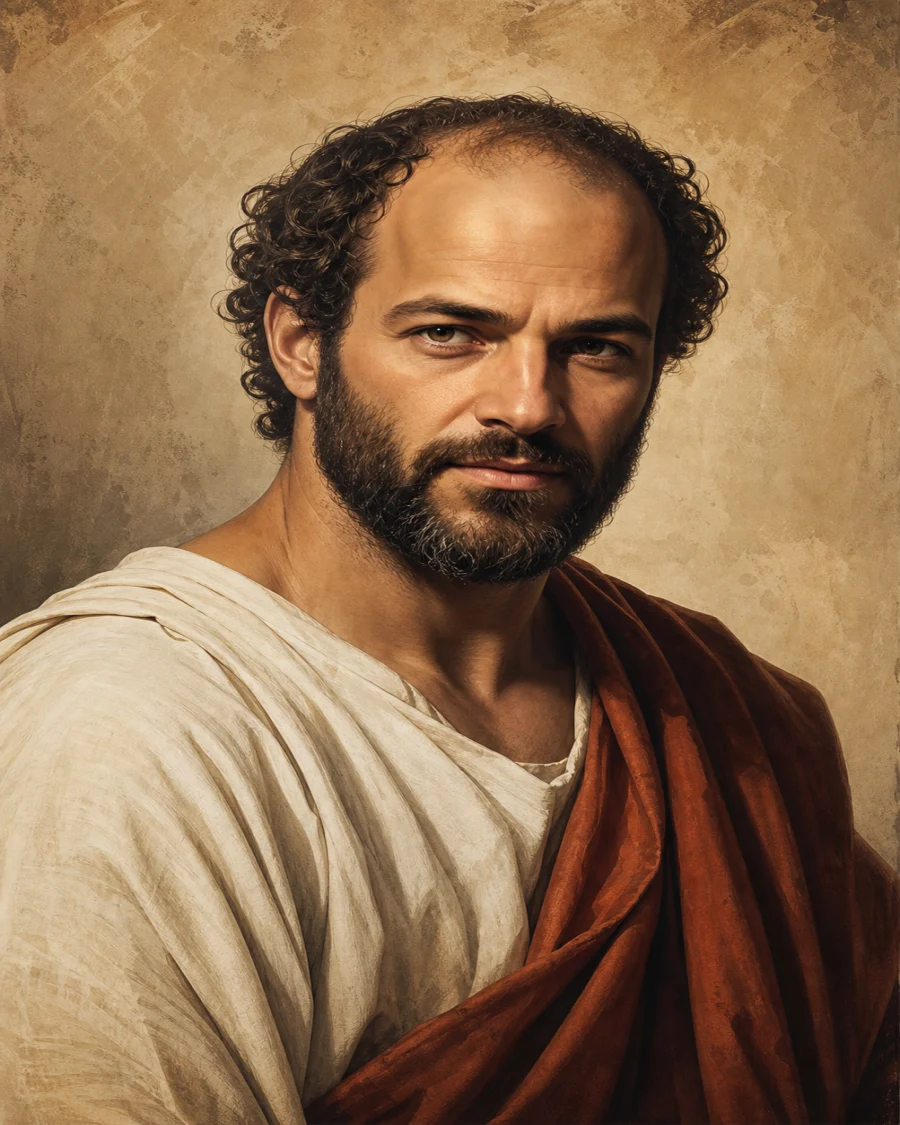
Socrates: interrupt the borrowed answer
Which part of your decision is being made by a word you have never examined?
Socrates worked in public and left no doctrine in his own hand. He asked people who claimed to understand courage, justice, piety, or success to say what those words meant. The conversations often ended without a neat definition. Their achievement was less comfortable: a person discovered that a confident life could be directed by reasons they could not defend.
That method matters when a decision is crowded with words such as sensible, selfish, loyal, ambitious, or safe. Each word may contain a genuine value, but it may also hide somebody else’s preference. Freedom begins before the final choice. It begins by refusing to let an undefined word issue orders in the voice of common sense.
Marcus held extraordinary authority, yet his notes dwell on what power cannot guarantee: the loyalty of colleagues, the health of a body, the judgment of history, the behavior of the next person in the room. The contrast matters. The Stoic distinction between what is and is not ‘up to us’ was not invented for people without obligations. It was a discipline for acting where outcomes remain shared with chance and other wills.
Responsibility becomes cleaner when it is attached to preparation, candor, effort, and conduct rather than guaranteed success. This does not mean outcomes do not matter. It means failure should be investigated without the magical belief that a sufficiently good person could have controlled every variable. Accountability asks what was yours; shame usually claims everything was.
Primary readingEpictetus, Enchiridion 1; Marcus Aurelius, Meditations Book 8
Nietzsche became a professor unusually young, then left academic life as illness made the position impossible. The years that produced his most distinctive books were physically difficult, geographically unsettled, and largely uncelebrated. That biography does not prove his philosophy, but it gives weight to his suspicion of values built entirely from institutional approval.
Self-authorship is often marketed as permission to do whatever feels authentic. Nietzsche makes it harder. A value becomes yours through the discipline required to embody it, the losses you accept for it, and the capacity to question it again. Rejecting inherited standards without building a demanding practice is not freedom; it is only reaction with a new name.
Primary readingNietzsche, The Gay Science §§276, 290, 341; Thus Spoke Zarathustra, ‘On the Three Metamorphoses’
Freedom is not the absence of influence. It is the difficult ability to notice influences, judge among them, and accept the consequences of a choice without claiming mastery over the whole world around it.
Before the next large decision, do not ask only, ‘What do I want?’ Ask: ‘Which reasons can I defend, which limits are real, and which cost am I willing to carry without making somebody else the villain?’
QUESTIONS & LIMITS
Read with context.
Does Stoicism blame people for circumstances outside their control?
It should not. The distinction of control narrows moral responsibility to judgment and chosen action. Social constraints, illness, coercion, and material conditions remain real even when a person looks for the agency still available within them.
Is Nietzsche’s self-authorship selfish?
It can be misread that way. His challenge concerns the creation and testing of values, not a blanket exemption from consequences or relationships. A life that merely reacts against others is still being governed by them.
EDITORIAL NOTE
Sources and method
This course distinguishes historical context from our modern interpretation. It does not imitate a philosopher's voice or present philosophy as medical, mental-health, legal, or financial care. Read our editorial standards.
Plato, Euthyphro and Apology
Epictetus, Enchiridion
Marcus Aurelius, Meditations
Friedrich Nietzsche, The Gay Science and Thus Spoke Zarathustra
Written and reviewed by Sages Reply Editorial Studio · August 28, 2026
 THE LIFE BEHIND THIS LESSONSocratesc. 470–399 BCE · Socratic inquiry