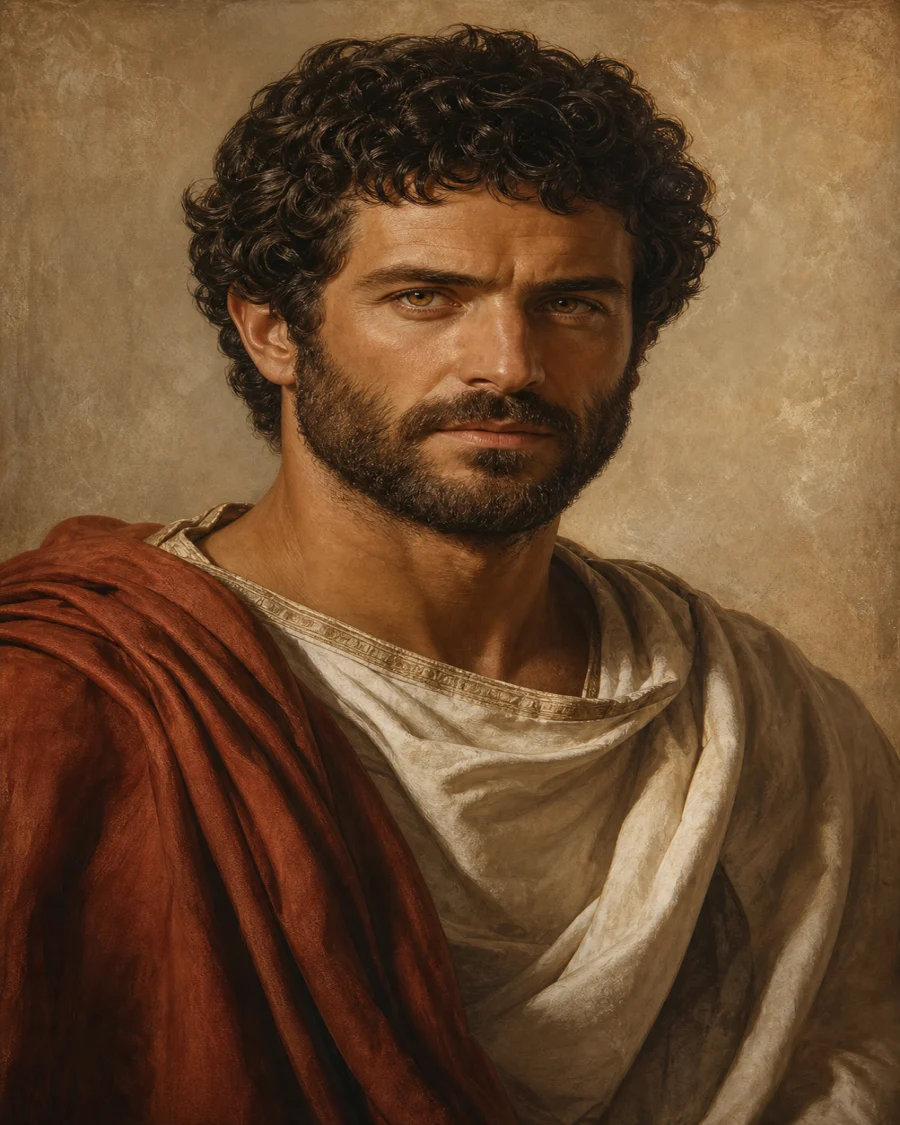
A person can have a compelling statement of purpose and almost no place for it in an ordinary week. Someone else may lack a grand explanation while steadily teaching, repairing, or caring. Aristotle helps shift attention from the description of a life to its activity, while leaving difficult questions about which activities deserve admiration.
Flourishing is larger than a successful afternoon
In Nicomachean Ethics I.7–10, Aristotle treats human flourishing as activity in accordance with virtue across a life. He also acknowledges external goods and the damage that severe misfortune can cause. The argument is not that a satisfying routine makes money, relationships, or political circumstances irrelevant.
A modern reading can retain the difference between possessing a capacity and using it well. Someone may be an excellent teacher by qualification yet have no opportunity to teach. Another may spend every day teaching in a way that suppresses students’ judgment. Neither credentials nor busyness alone settles whether the activity is good.
The activity and the applause can come apart
Public recognition usually arrives in a compact form: a prize, title, testimonial, or promotion. The activity it recognizes is spread across preparation, uncertainty, ordinary mistakes, and repetition. Confusing the two makes a meaningful direction look empty whenever applause pauses. It can also make a prestigious direction appear fulfilling before its daily work has been examined.
The separation is not absolute. Recognition can secure resources and make worthwhile work possible. The issue is whether it serves the activity or gradually replaces its standard. A teacher whose explanations receive praise still has to ask whether students understand more, including when their new understanding challenges the teacher.
A fictional case: the admired tutor
Imagine a tutor celebrated for memorable explanations. Students repeat the phrases fluently but struggle when a problem changes. Slowing down to hear their reasoning initially makes the lesson less impressive. There are awkward silences, fewer elegant conclusions, and less material covered.
The tutor now faces two competing accounts of success. One preserves the appearance of expertise; the other develops someone else’s ability to judge. Choosing the second does not guarantee praise, and the tutor still needs an income. But it clarifies which outcome the craft is supposed to serve. Purpose becomes visible in what the tutor is willing to change.

Why this is not a command to stay productive
Aristotle’s own hierarchy gives contemplation a privileged place in Book X.7. Treating all contemporary sources of meaning as equally Aristotelian would conceal that difference. Our application is narrower: a claim about purpose should be tested against the kind of activity it organizes, not treated as proof that the ancient account endorses every modern vocation.
Activity also cannot be measured simply by output. Listening, recovery, and leaving room for another person may produce little that fits a performance report. A life reduced to continuous achievement can undermine the relationships and conditions that make its achievements worth wanting. A workable purpose has room for dependence, interruption, and the fact that no one flourishes entirely alone.
Sources and editorial method
The perspective above is a modern editorial interpretation grounded in Aristotle’s documented ideas. It is not a historical quotation or a claim that the philosopher encountered this case.
- Aristotle, Nicomachean Ethics I.7–10: activity, external goods, and misfortune (W. D. Ross translation) ↗
- Nicomachean Ethics X.7: the priority of contemplation (W. D. Ross translation) ↗
Written and reviewed by Sages Reply Editorial Studio. Read the contextual thinker profile · See our editorial standards · Report a concern
Read slowly. Keep what proves useful.