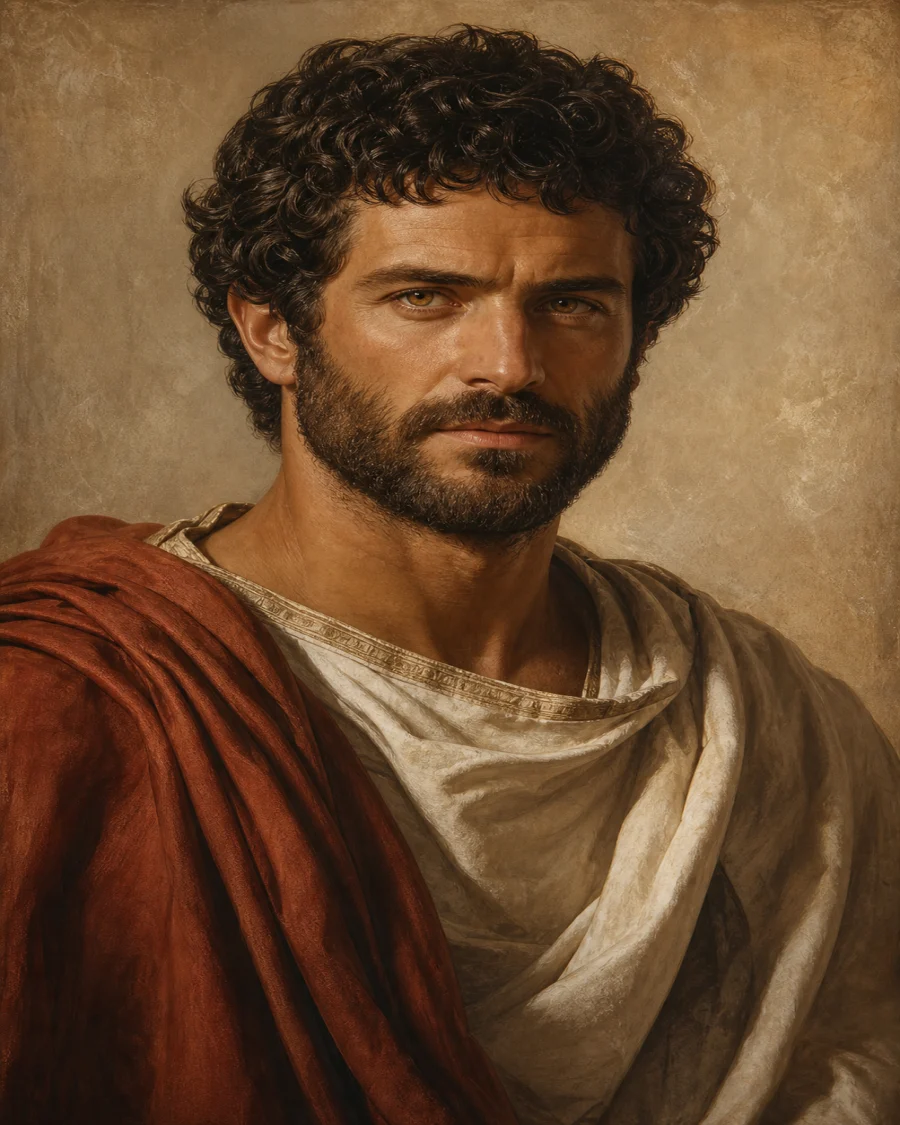
Twenty years in the Academy
Born in Stagira in 384 BCE, Aristotle entered Plato's Academy at about seventeen and remained until Plato's death in 347. That long association resists the familiar picture of a pupil who simply rejected an abstract teacher. Independent thinking also develops by returning to shared problems with different questions. The contrast between a supposedly unreal Plato and an entirely practical Aristotle hides how much argument lies between their positions.
Research after the Academy, including work around Lesbos, placed living forms and activities within his philosophical attention. Different objects required different kinds of investigation. The warning in the Nicomachean Ethics not to demand the same precision everywhere can be read alongside that breadth. It is more careful to connect a varied research life with an interest in method than to claim that one journey directly produced a particular theory.
Born in Stagira rather than Athens, Aristotle arrived at Plato’s Academy as an outsider and remained for roughly twenty years. The length of that apprenticeship complicates the tidy story of a student simply rejecting his teacher. Aristotle inherited the Academy’s questions, then pushed toward observation, classification, and explanations grounded in how living and political things actually develop.
From a prince’s tutor to a research community
His teaching of Alexander is famous, but detailed claims about what he taught or caused Alexander to do go beyond the evidence. A celebrated pupil's later actions cannot all be read as a teacher's philosophy in practice. The relationship instead raises a question about the limits of intellectual influence near power. What an educator could change and what later admirers imagine he changed are different matters.
At the Lyceum, research and teaching formed a setting broader than solitary authorship. Many surviving works are compressed and argumentative rather than polished invitations to a general audience. Reading them means following distinctions and objections. That institutional background encourages an understanding of ethics as sustained investigation: happiness and virtue are problems for trained judgment, not simply conclusions to memorize.
After leaving Athens, he moved through different courts and communities, including a period connected with Macedon, before returning to establish the Lyceum. The school joined teaching with the collection of constitutions, biological observation, and inquiry across many fields. His ethics grew inside this larger project: to understand a capacity, look at what it does, what conditions help it develop, and what excellent activity would mean for that kind of being.
Leaving Athens and an unfinished legacy
Following Alexander's death, an anti-Macedonian climate helped make Athens unsafe for Aristotle; he left and died in 322 BCE. His later intellectual authority should not be confused with uninterrupted security during his own life. Preservation, editing, and interpretation across languages also belong to the story of how his work became influential. A lasting name can conceal a much more contingent career.
His account of habits, friendship, and judgment remains rich, while his exclusions and hierarchies require scrutiny. A theory of flourishing can illuminate conditions of human development and still restrict whose development counts. The task is neither to excuse everything nor to discard every distinction. It is to ask where an explanatory framework recognizes human capacities and where the author's social assumptions prevent it from seeing them.
Political upheaval forced Aristotle to leave Athens near the end of his life. The surviving corpus is largely lecture material and school texts rather than polished books for a general audience. His account of flourishing remains powerful because it refuses to reduce happiness to mood, but it must be read critically beside his defenses of hierarchy and exclusion. Practical wisdom includes the willingness to use an insight without inheriting every boundary of the world that produced it.